


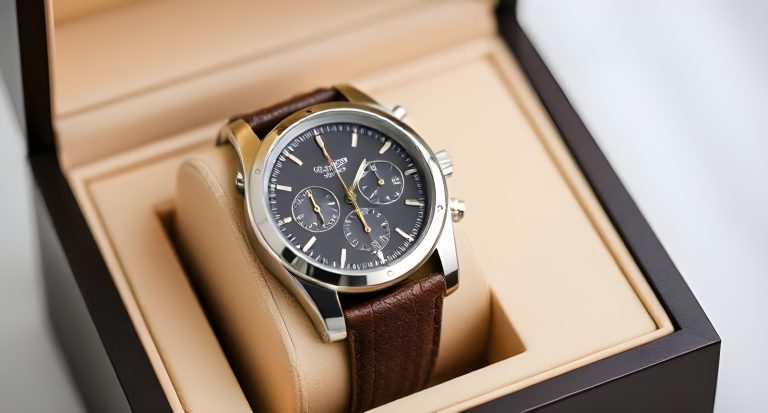

A chronograph watch is a timepiece that combines the functionality of a standard analog watch with a built-in stopwatch. The word “chronograph” comes from the Greek chronos (time) and graph (writer) — literally meaning “time writer.” Unlike a regular watch, a chronograph allows you to measure elapsed time intervals with precision — down to fractions of a second.
Think of it as having a miniature stopwatch integrated into your wristwatch. Whether you’re timing a sprint, tracking your coffee brew time, or timing a race lap, a chronograph delivers professional-grade timing right on your wrist.
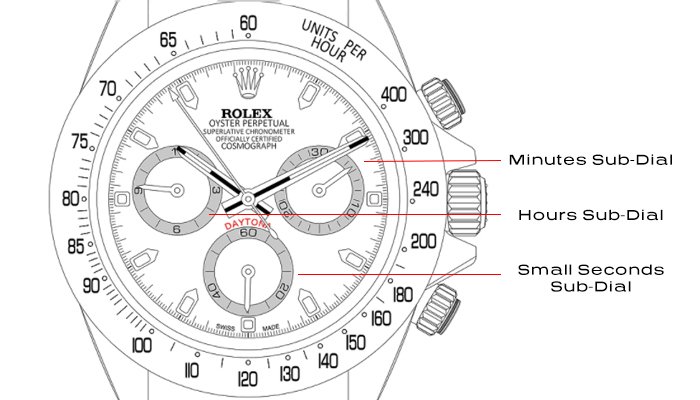
Key Feature: Most chronographs feature two or three sub-dials (also called registers) on the face — typically for seconds, minutes, and sometimes hours of elapsed time — along with pushers on the side of the case to start, stop, and reset the timer.
How Does a Chronograph Watch Work? (Step-by-Step Breakdown)
Understanding how a chronograph works demystifies its elegance and engineering. Here’s what’s happening under the hood:
1. The Three Core Components
- Main Timekeeping Movement: Powers the hour, minute, and second hands (just like a regular watch).
- Chronograph Mechanism: A separate, independent timing system that runs only when activated.
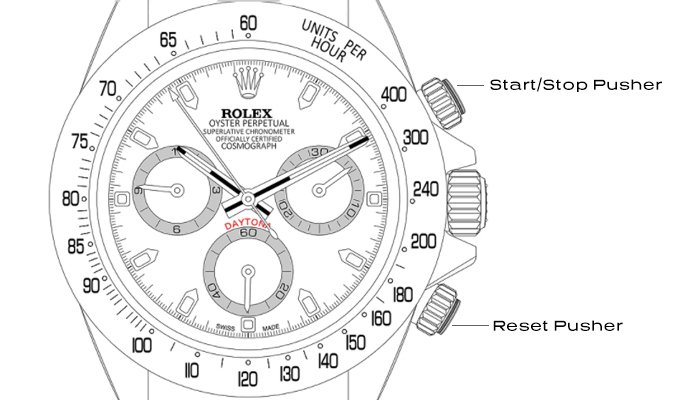
- Pushers (Buttons): Usually two or three on the right side of the case:
- Top pusher: Starts and stops the chronograph.
- Bottom pusher: Resets the chronograph to zero.
- (Some models have a third pusher for split-time/lap timing.)
2. The Magic Inside: The Column Wheel vs. Cam System
- Column Wheel: The premium, traditional mechanism. Uses a cylindrical gear with notches to coordinate the chronograph functions. Known for smooth, precise operation. Found in luxury brands like Omega, Patek Philippe, and Rolex.
- Cam System: A more cost-effective, modern alternative. Uses levers and springs. Slightly less refined but highly reliable and common in mid-range watches like Seiko and Citizen.
3. Sub-Dials Explained
Most chronographs display elapsed time across three sub-dials:
- 30-second or 60-second counter (top sub-dial): Tracks seconds elapsed.
- 30-minute counter (bottom left): Tracks minutes elapsed.
- 12-hour counter (bottom right): Tracks total hours elapsed (for long timing sessions).
Note: Some modern chronographs use digital displays, analog-digital hybrids, or even a single central seconds hand for timing — but the classic three-sub-dial layout remains iconic.
Chronograph vs. Regular Watch: What’s the Difference?
| Feature | Regular Watch | Chronograph watch |
|---|---|---|
| Time Display | Hours, minutes, seconds | Hours, minutes, seconds + stopwatch |
| Timer Function | No | Yes — start, stop, reset |
| Pushers | None | 2–3 on the case side |
| Complexity | Simple movement | More complex, higher component count |
| Price Range | $50 – $500 | $200 – $50,000+ |
| Best For | Everyday wear | Sports, racing, aviation, professionals |
Bottom Line: A chronograph isn’t just “a watch with a timer.” It’s a tool watch engineered for precision, performance, and prestige. Chronographs are the best ones for watch enthusiasts to understand watch complication.
Who Invented the Chronograph? A Brief History
The first true chronograph was invented in 1816 by Louis Moinet, a French watchmaker, to track celestial movements. But it was Nicolas Mathieu Rieussec who patented the first commercially used chronograph in 1821 — commissioned by King Louis XVIII to time horse races. Rieussec’s device used ink dots to mark elapsed time on a dial — the original “time writer.”
Fast forward to the 20th century, and chronographs became indispensable tools for:
- Aviators (measuring flight durations)
- Racers (timing laps at Le Mans and Formula 1)
- Astronauts (NASA used Omega Speedmasters on Apollo missions)
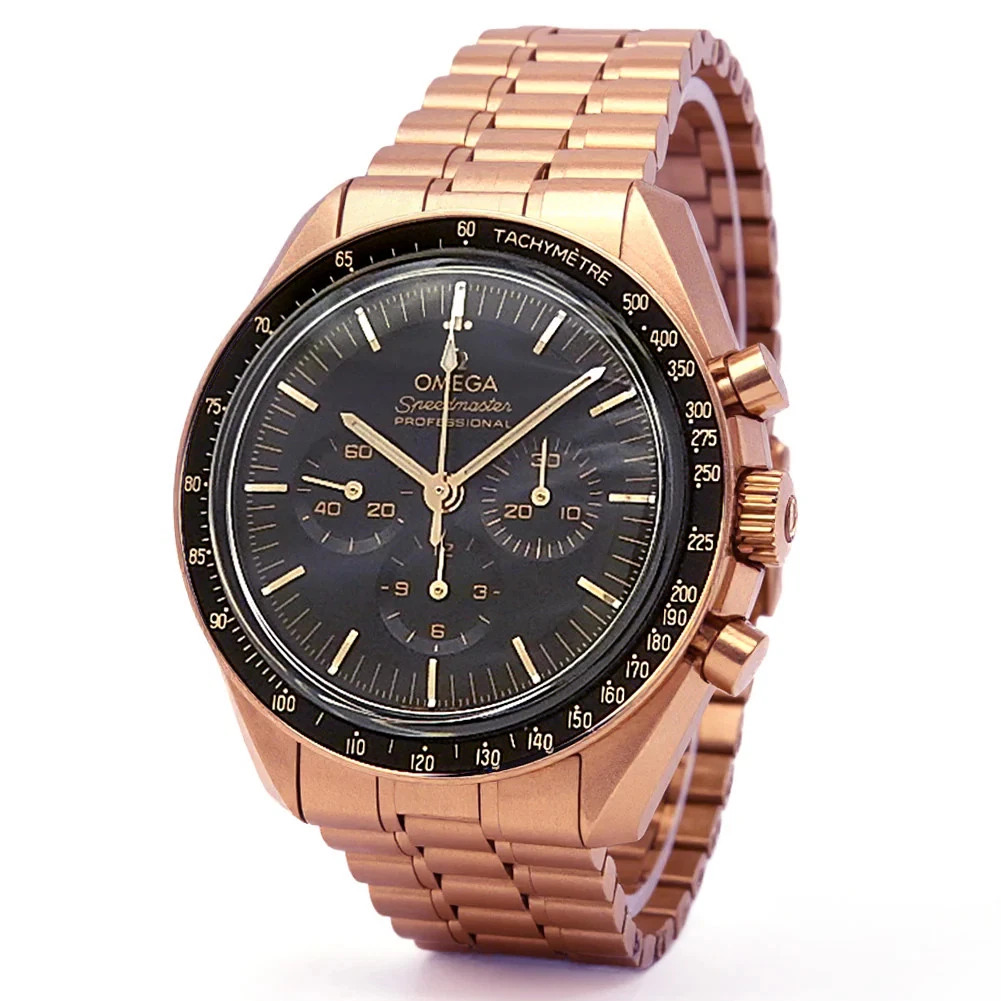
The Omega Speedmaster Professional, worn on the moon in 1969, remains the most famous chronograph in history — earning the nickname “Moonwatch.”
Top 5 Chronograph Watches to Buy in 2025 (By Budget)
Looking to invest in a chronograph? Here are our top picks across price points:
1. Best Luxury Chronograph: Omega Speedmaster Professional (Ref. 311.30.42.30.01.005)
- Why? NASA-certified, manual-wind movement, sapphire crystal, stainless steel.
- Price: ~$6,200
- Perfect for: Collectors, aviation enthusiasts, history lovers.
2. Best Premium Chronograph: Tag Heuer Carrera (Ref. CAR2A1F.BA0876)
- Why? Iconic design, Swiss-made automatic movement, water-resistant to 100m.
- Price: ~$3,500
- Perfect for: Style-conscious drivers and professionals.
3. Best Mid-Range Chronograph: Seiko Prospex Speedtimer (SRP777)
- Why? Automatic movement, 1/5-second chronograph, 100m water resistance.
- Price: ~$700
- Perfect for: First-time chronograph buyers seeking value.
4. Best Affordable Chronograph: Casio G-Shock GA-110-1A
- Why? Tough, solar-powered, 200m water-resistant, digital chronograph with countdown.
- Price: ~$120
- Perfect for: Outdoor adventurers, gym-goers, students.
5. Best Value Luxury: Tissot Everytime Chronograph (T114.410.11.051.00)
- Why? Swiss-made, sapphire crystal, elegant design, automatic movement.
- Price: ~$1,100
- Perfect for: Professionals seeking prestige without the premium price.
Common Chronograph Watch Terms You Should Know
Before you buy, master these essential terms:
| TERM | MEANING |
|---|---|
| Flyback Chronograph | Instantly resets and restarts the timer with one press — ideal for pilots. |
| Rattrapante (Split-Second) | Dual chronograph hands to time multiple events simultaneously. |
| Tachymeter Scale | Bezel or dial scale to calculate speed over a fixed distance (e.g., km/h or mph). |
| Telemeter Scale | Measures distance based on the time between seeing an event and hearing its sound (e.g., lightning and thunder). |
| Chronograph Movement | Can be quartz (battery-powered) or mechanical (automatic/manual-wind). |
Pro Tip: If you see a tachymeter scale on the bezel — you’re looking at a true sports chronograph, often used by drivers and racers.
Why Chronograph Watches Are Still Popular in 2025
Despite smartphones and smartwatches, chronograph watches are experiencing a renaissance. Here’s why:
- Mechanical Artistry: People crave craftsmanship over digital convenience.
- Style Statement: Chronographs exude sophistication — worn by CEOs, athletes, and celebrities.
- Durability: Mechanical chronographs last generations with proper care.
- Nostalgia & Legacy: Models like the Speedmaster and Daytona carry decades of heritage.
- Investment Value: Many chronographs appreciate — especially limited editions.
Fun Fact: In 2024, chronograph watches accounted for over 35% of all Swiss watch exports — proving their enduring appeal.
How to Use a Chronograph Watch: A Quick Tutorial
- Press the top pusher once → Chronograph starts (center seconds hand moves).
- Press it again → Stops the timer (hands freeze).
- Press the bottom pusher → Resets all hands to zero.
- To read elapsed time: Check the sub-dials for minutes/hours and the center hand for seconds.
Final Thoughts: Is a Chronograph Watch Worth It?
Absolutely — if you value precision, heritage, and style.
Whether you’re a racing fan, a pilot, a tech enthusiast, or simply someone who appreciates fine mechanics, a chronograph watch is more than a tool — it’s a piece of horological art worn on your wrist.
From the moon to the racetrack, from the boardroom to the beach, the chronograph remains one of the most iconic and functional watch complications ever created.
Frequently Asked Questions (FAQs)
Q: Can you swim with a chronograph watch?
A: Only if it’s rated for water resistance (e.g., 100m+). Avoid pressing pushers underwater unless explicitly rated for it.
Q: Do chronographs need more maintenance?
A: Yes — mechanical chronographs should be serviced every 5–7 years due to added complexity.
Q: Are quartz chronographs any good?
A: Absolutely! Quartz chronographs (like Casio or Citizen) are highly accurate, low-maintenance, and affordable — perfect for daily use.
Q: What’s the difference between a chronograph and a chronometer?
A: A chronograph measures elapsed time. A chronometer is a watch certified for extreme accuracy (by COSC). A watch can be both!
Q: Which brand makes the best chronograph?
A: It depends on your budget and style. Omega, Rolex, TAG Heuer, and Zenith lead in luxury. Seiko and Citizen dominate value and reliability.
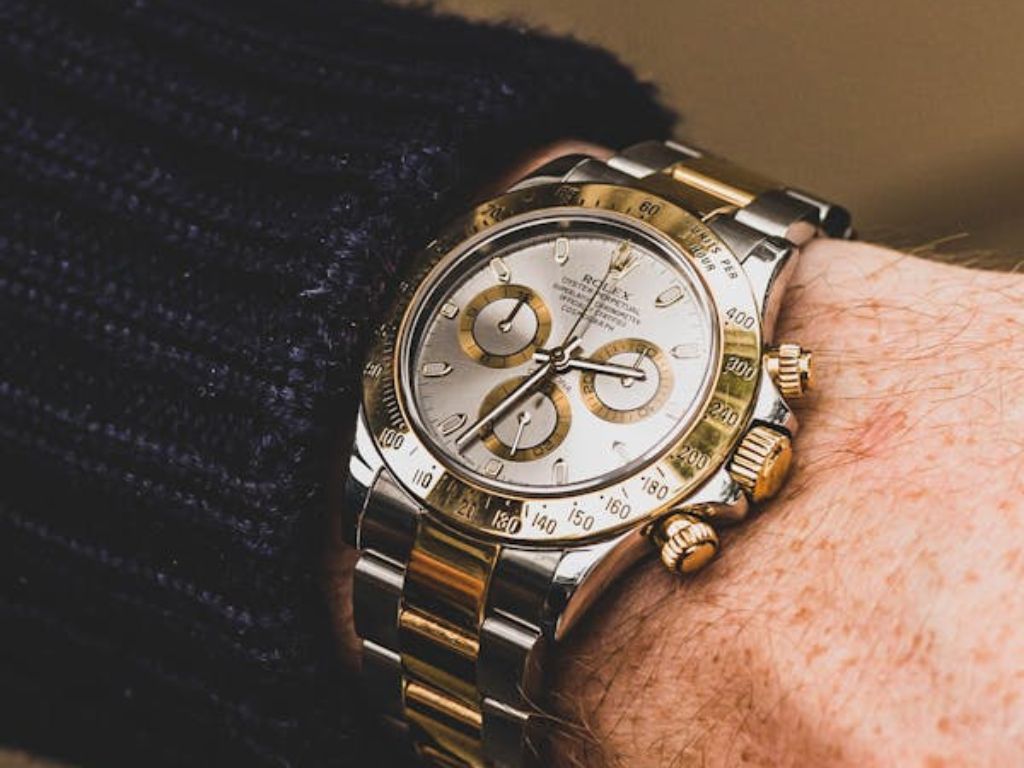
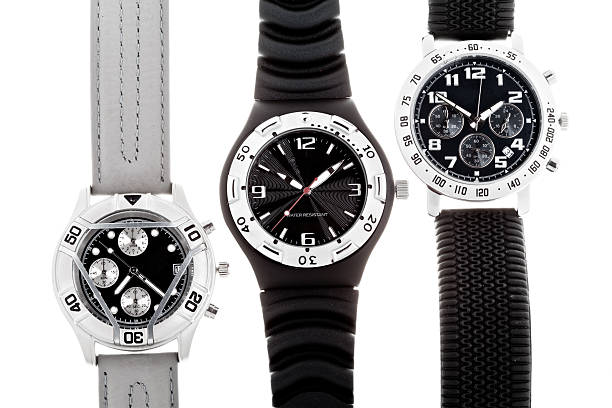
The extra subdials and pushers give it that sporty, detailed look that really stands out on the wrist. It feels purposeful, a little technical, and definitely stylish.