


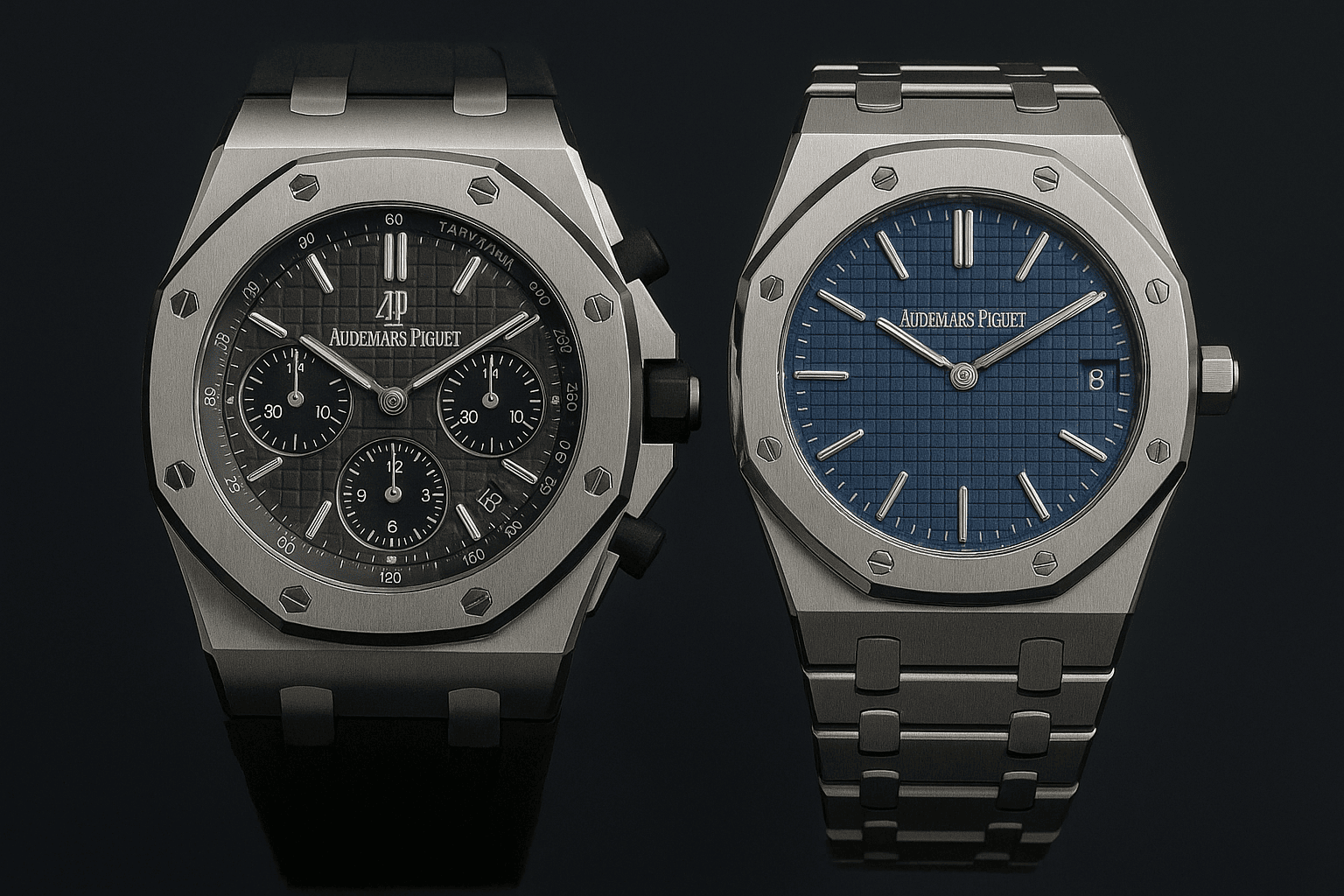

The Audemars Piguet Royal Oak and Royal Oak Offshore are two titans of modern horology. Both born from the same revolutionary DNA, they represent vastly different philosophies in luxury watchmaking. One is a timeless icon; the other, a bold statement.
If you’re considering investing in one—or simply want to understand the difference between these two legendary timepieces—this is your definitive, easy-to-digest guide. We break down the key differences in design, size, watch movement, and value, so you can make an informed decision that matches your style, wrist, and budget.
Royal Oak vs Royal Oak Offshore Origins: From “Jumbo” to “The Beast”
The story begins in 1972 with the Royal Oak (Ref. 5402ST). Designed by Gérald Genta in just one weekend, it was a radical concept: a luxury sports watch made entirely of stainless steel, priced like gold. Its 39mm case was considered massive at the time—earning it the nickname “Jumbo”—and featured an octagonal bezel held by eight exposed screws, a “tapisserie” dial, and an integrated bracelet.
It wasn’t an instant hit, but it changed everything. It defined the luxury sports watch genre.
Fast forward to 1993, and Audemars Piguet needed something new. Designer Emmanuel Gueit took Genta’s blueprint and amplified it. The result? The Royal Oak Offshore (Ref. 25721ST)—a 42mm powerhouse with a visible rubber gasket under the bezel, black ceramic caps on the pushers, and a bolder, more aggressive presence.
Legend has it Genta himself called it “The Beast,” disapproving of its size and ruggedness. But the market loved it. What started as a controversial spin-off became a cultural phenomenon.
Think of it this way:
The Royal Oak is a tailored suit—elegant, refined, timeless.
The Offshore is a tactical jacket—rugged, powerful, unapologetic.

Design: Subtlety vs. Statement
While both share the iconic octagonal bezel and integrated bracelet, their personalities couldn’t be more different.
| Feature | Royal Oak | Royal Oak Offshore |
|---|---|---|
| Bezel | Clean, polished chamfers, no gasket | Rubber gasket visible between bezel and case |
| Pushers | Exposed metal (on chronographs) | Often capped with black ceramic or rubber |
| Dial Pattern | “Petite Tapisserie” or “Grande Tapisserie” (finer grid) | “Méga Tapisserie” (larger, bolder squares) |
| Aesthetic | Understated luxury, dress-to-dinner versatility | Sporty aggression, high-impact presence |
| Bracelet | Slimmer, fluid links | Thicker, more robust, often with rubber inserts |
The Royal Oak whispers elegance. The Offshore roars with confidence. Choose the former for boardroom meetings and galas. Choose the latter for yachts, race tracks, or nights where you want to command attention.
Size & Wearability: A Critical Difference
This is where most buyers get tripped up. They look similar, but wear completely differently.
Let’s break down the key models:
Royal Oak Lineup (2025)
- Royal Oak “Jumbo” Extra-Thin (Ref. 16202ST): 39mm x 8.1mm thick
The spiritual successor to the original 1972 model. Ultra-thin, lightweight, perfect for smaller to average wrists (6.5”–7.5”). No seconds hand—just hours and minutes. - Royal Oak Selfwinding (Ref. 15500/15550): 41mm (men’s) / 37mm (unisex)
The mainstream model. Thicker than the Jumbo (~10.8mm), with a traditional three-hand layout including a running seconds.
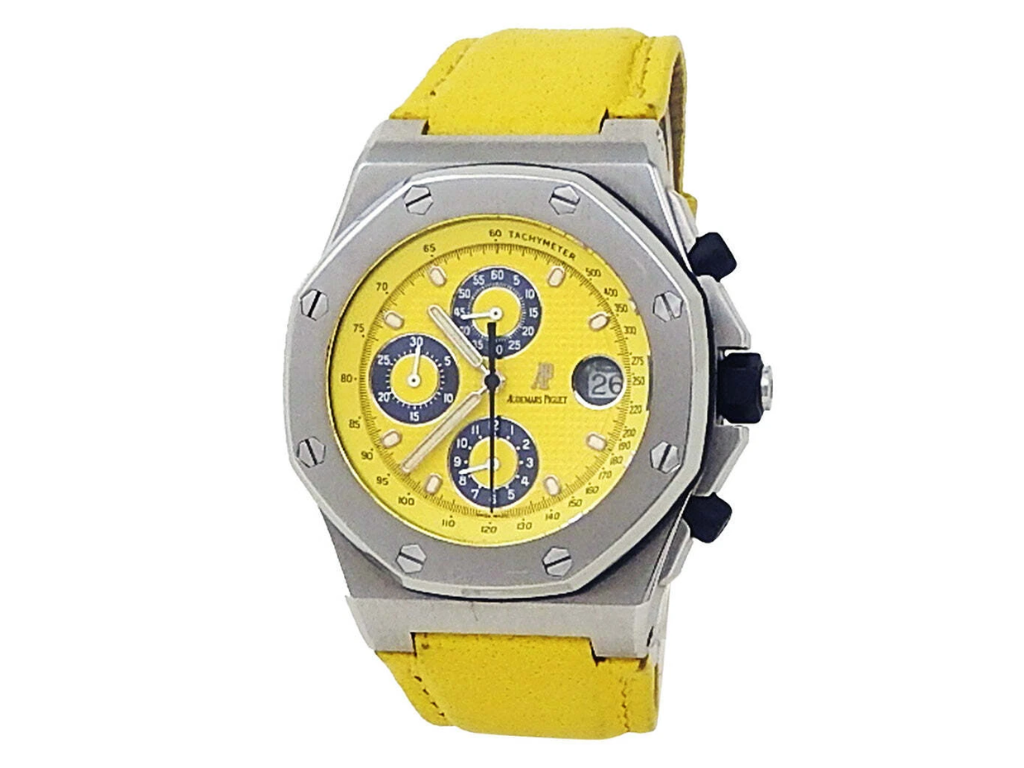
Royal Oak Offshore Lineup (2025)
- Royal Oak Offshore Chronograph (Ref. 26331ST): 42mm x ~14.5mm thick
The classic “Beast.” Noticeably thicker and heavier due to the chronograph movement. Best suited for larger wrists (7”+). - Royal Oak Offshore Diver: 42mm, with a crown at 10 o’clock for the inner rotating bezel.
- Special Editions: Can go up to 44mm or even 48mm (e.g., Arnold Schwarzenegger Legacy).
Pro Tip: The 1mm diameter difference (41mm vs 42mm) is less important than the 4–6mm increase in thickness. The Offshore sits much higher on the wrist and can feel top-heavy if your wrist is on the smaller side.
Movement & Mechanics: Precision vs. Power
- Royal Oak “Jumbo” (16202ST): Uses the new Caliber 7121, a thin automatic movement with a 55-hour power reserve. A modern upgrade to the legendary Caliber 2121.
- Royal Oak Selfwinding (15500): Powered by Caliber 3120, a robust in-house automatic with 60-hour power reserve.
- Royal Oak Offshore: Typically uses Caliber 3126/3127 (chronograph) or specialized movements for divers. Built for durability, with enhanced shock resistance.
While the Royal Oak prioritizes slimness and refinement, the Offshore is engineered for impact and function-making it ideal for active lifestyles, even in high-performance tourbillon watches.
Royal Oak vs Royal Oak Offshore –Value & Investment: Which Holds Its Worth?
For collectors, this is the million-dollar question.
| Metric | Royal Oak | Royal Oak Offshore |
|---|---|---|
| Resale Value (2025) | ★★★★★ (Exceptional) | ★★★★☆ (Strong, but selective) |
| Market Demand | Sky-high, especially for “Jumbo” models | High for limited editions; standard models vary |
| New Retail Price | $35,000–$45,000 | $30,000–$55,000+ |
| Pre-Owned Market | Often sellsabove retail(especially 16202ST) | Limited editions spike; standard models hold well |
| Iconic Status | Universally revered as a design classic | Cult favorite; polarizing but highly collectible |
The Verdict:
The Royal Oak, particularly the 39mm “Jumbo” Extra-Thin (16202ST), is the safer investment. Its historical significance and scarcity make it a blue-chip asset in any collection.
The Offshore shines in limited editions—think the Michael Schumacher Titanium, Black Panther Flying Tourbillon, or Terminator models. These can appreciate dramatically. But the standard Offshore Chronograph watch is more of a passion purchase than a guaranteed appreciator.
Royal Oak Chronograph vs. Offshore: Clearing the Confusion
Many confuse these two AP Watches. Here’s the key:
- Royal Oak Chronograph (e.g., Ref. 26331): Part of the main Royal Oak line. Sleeker profile, no gasket, traditional sub-dials at 3, 6, 9 o’clock. More elegant.
- Royal Oak Offshore Chronograph: Bulkier, with a visible gasket, ceramic-capped pushers, and often sub-dials at 6, 9, 12 o’clock. Built for impact.
In short: If it has a gasket and ceramic pushers, it’s an Offshore.
Who Should Buy Which?
Choose the Royal Oak if you:
- Want a versatile, everyday luxury watch
- Prefer a slimmer, more refined profile
- Have a wrist under 7”
- Value heritage and long-term investment
- Appreciate subtle details over bold statements
Choose the Royal Oak Offshore if you:
- Love oversized, high-impact watches
- Have a larger wrist (7”+) and want presence
- Are drawn to streetwear, motorsports, or pop culture
- Want a collector’s piece (especially limited editions)
- Don’t mind standing out
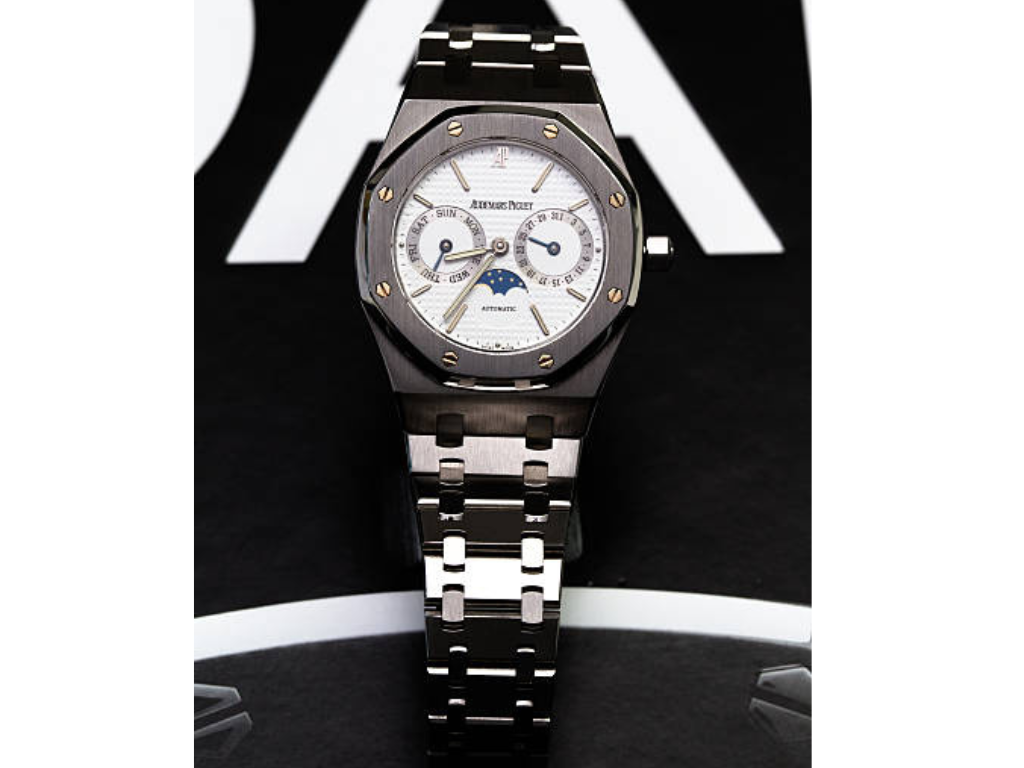
Final Word: Two Legends, One Legacy
The Royal Oak and Royal Oak Offshore aren’t rivals—they’re chapters in the same epic story.
The Royal Oak is horological perfection: a balanced, elegant masterpiece that redefined luxury. The Royal Oak Offshore is audacious innovation: a fearless evolution that pushed boundaries.
One honors tradition. The other defies it.
Which will you choose?
FAQs: Quick Answers (2025)
Q: Is the Royal Oak Offshore too big for daily wear?
A: For many, yes. It’s best for weekends, events, or those who love bold fashion. The 39mm Royal Oak is far more versatile.
Q: What replaced the 15400/15500 Royal Oaks?
A: The 15500 was succeeded by the 16202ST “Jumbo” Extra-Thin in 2022. The 37mm Selfwinding (15550) remains available.
Q: Do women wear the Offshore?
A: Absolutely. Many do, especially the 37mm Offshore models. But the 39mm Royal Oak remains the most popular unisex choice.
Q: Which has better water resistance?
A: The Royal Oak Offshore Diver wins with 300 meters. Standard Royal Oaks offer 50m; Offshore Chronographs offer 100m.
Leave a Comment