




Among the most revered complications in haute horlogerie, the perpetual calendar watch stands as a testament to centuries of engineering refinement. Unlike standard date displays or even annual calendars, a true perpetual calendar automatically accounts for months of varying lengths including February during leap years without manual correction. But what makes this complication so extraordinary isn’t just its accuracy; it’s the sheer rarity born from its complexity, craftsmanship, and cost. In this article, we’ll explore what defines a perpetual calendar watch, why it remains exceptionally rare, and what collectors should know before investing in one especially from icons like Patek Philippe.
What Is a Perpetual Calendar Watch?
A perpetual calendar watch is a mechanical timepiece equipped with a highly sophisticated movement that tracks the day, date, month, and often moon phases—automatically adjusting for 28-, 29-, 30-, and 31-day months. Its internal “mechanical memory” spans 1,461 days (four years), allowing it to recognize leap years and correctly display February 29 every four years.
Crucially, perpetual calendars are built to follow the Gregorian calendar, meaning they remain accurate until 2100—the next year skipped in the leap-year cycle due to astronomical alignment rules. At that point, the watch will require manual adjustment by a skilled watchmaker.
Unlike quartz or digital calendars, perpetual calendars achieve this feat through purely mechanical means: intricate systems of cams, levers, gears, and racks—often comprising hundreds of additional components beyond a standard movement.
Key Distinction: An annual calendar only distinguishes between 30- and 31-day months and requires manual correction every March 1. A perpetual calendar needs no intervention for decades.
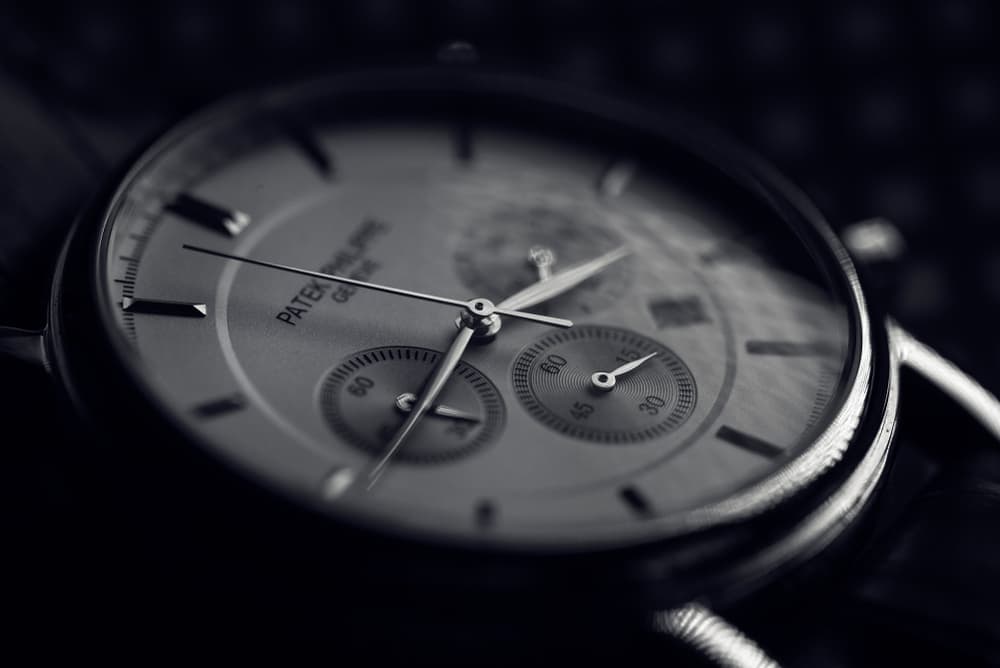
How Does a Automatic Perpetual Calendar Watch Work?
Being able to tell whether a month has 30 or 31 days and whether it’s a leap year is something we take for granted on our phones. But in a mechanical watch, this requires an extraordinary level of engineering.
Here’s how it works:
- Calendar cam system: A set of cams encoded with the month and leap-year cycle data rotates over a four-year period, guiding the date wheel so that it jumps correctly from 28/29, 30, or 31 to the first of the next month.
- Levers and wheels: These interact with the calendar cam to trigger instant changes exactly at midnight.
- Automatic winding: Many modern perpetual calendar watches, including some iconic Patek Philippe pieces, pair the calendar mechanism with an automatic movement, meaning the watch winds itself as you wear it — reducing the need for manual winding. One of the earliest automatic perpetual calendar wristwatch models was introduced by Patek way back with reference 3448, which was produced in low numbers (around 586 total), contributing to its rarity.
- Moon phase & additional indicators: High-end perpetual calendars also display moon phases and leap-year cycles, each of which requires additional gear trains and adds to the mechanical complexity.
It’s this level of mechanical “programming” that sets perpetual calendars apart they are essentially tiny mechanical computers operating without electronics.
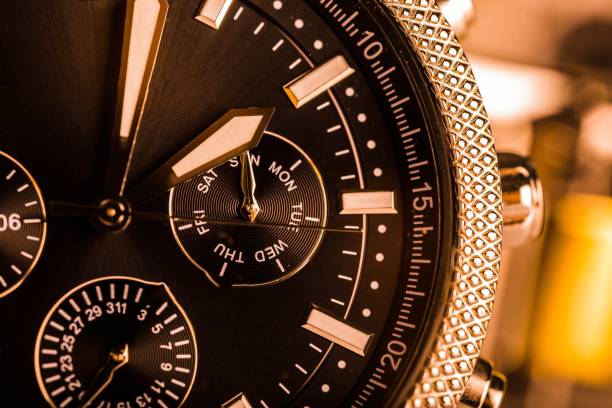
Why Is the Perpetual Calendar So Rare?
1. Extreme Mechanical Complexity
Building a perpetual calendar demands master-level watchmaking. The mechanism must integrate seamlessly with the base movement while maintaining precision. Even minor errors in gear alignment can cause misreads or damage. According to industry estimates, fewer than 5% of all mechanical watches produced globally feature a true perpetual calendar.
2. High Production Costs
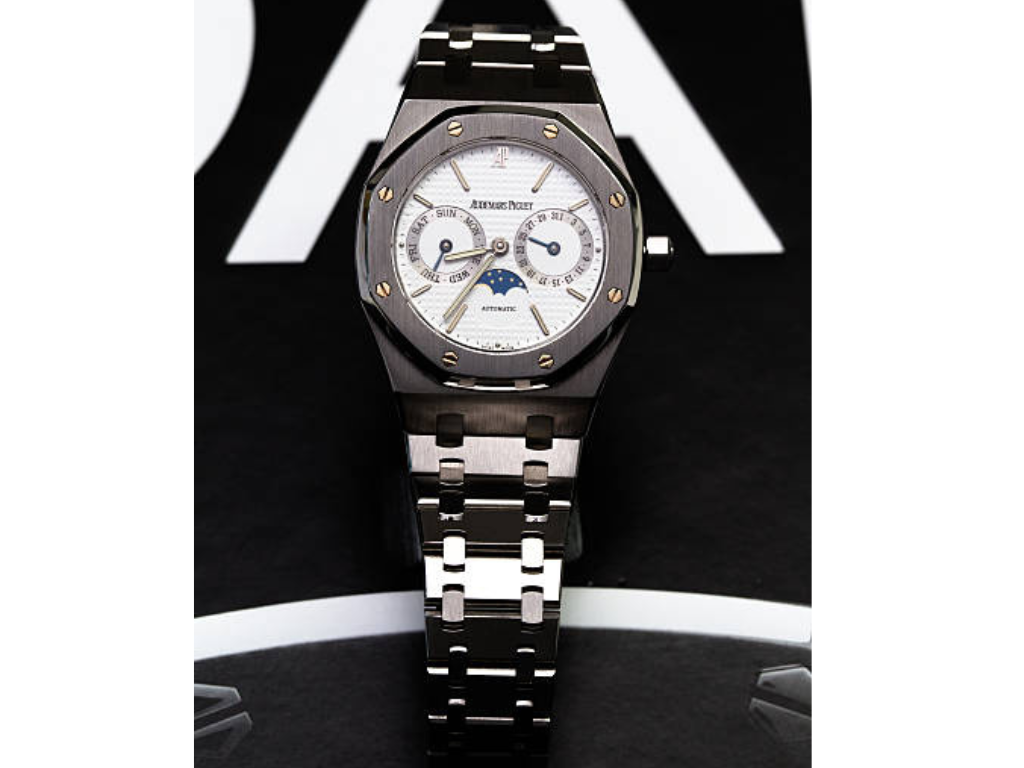
Due to the labor-intensive assembly and rigorous quality control, perpetual calendars command premium prices. Entry-level models start around $30,000–$50,000, while iconic references like the Patek Philippe Ref. 5327 or Audemars Piguet Royal Oak Perpetual Calendar—easily exceed $100,000. Limited production runs further restrict availability.
3. Skilled Craftsmanship Is Scarce
Only a handful of manufacturers primarily Patek Philippe, Vacheron Constantin, Jaeger-LeCoultre, Audemars Piguet, and Glashütte Original produce in-house perpetual movements at scale. Training a watchmaker to assemble and regulate one can take years, contributing to bottlenecks in supply.
4. Long-Term Service Requirements
While designed to run unadjusted for decades, perpetual calendars still require servicing every 5–10 years. Finding technicians qualified to handle such complications is difficult outside major watchmaking hubs like Geneva or Le Brassus.
Patek Philippe Perpetual Calendar Watches -A Collector’s Dream
Among perpetual calendars, Patek Philippe holds a legendary status. Patek Philippe perpetual calendar watches regularly achieve record prices at auctions, reflecting both rarity and heritage.
- Patek Philippe Ref. 1518 — Launched in 1941 as the first serially produced perpetual calendar chronograph, this reference is iconic and highly collectible.
- Patek Philippe Ref. 2499/Ref. 3448 — These models exemplify rarity. The ref. 2499, especially with rare dial variations, has fetched millions at auction, while the ref. 3448 was among the first automatic perpetual calendar wristwatches with limited production.
- Modern Patek models — Contemporary Patek pieces like the 5236P In-Line Perpetual Calendar feature innovative layouts for readability and are prestigious collector pieces.
Best Perpetual Calendar Watches to Consider
Here’s a glimpse into some of the best perpetual calendar watches you might encounter across a range of styles and price points:
• Frederique Constant Classic Perpetual Calendar
An affordable entry (around $9,995) for those seeking mechanical sophistication without the stratospheric price tag.
• Jaeger-LeCoultre Master Ultra Thin Perpetual
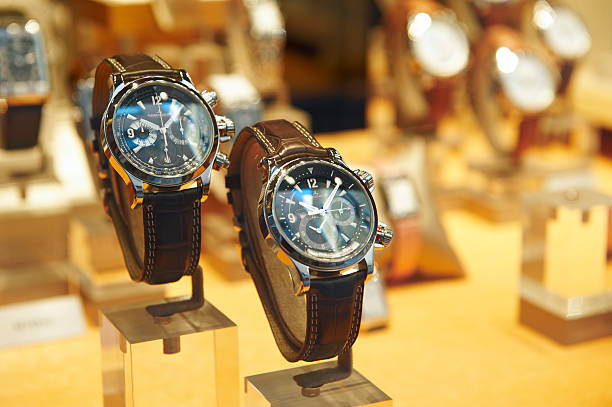
Jaeger-Lecoultre watches a refined perpetual calendar option (~$28,500) with timeless design and excellent finishing.
• IWC Ingenieur Perpetual Calendar 41
A modern take on classic complication with user-friendly crown-adjustment and sporty appeal (~$36,900).
• Bulgari Octo Finissimo Perpetual Calendar
Notable for its ultra-thin profile and cutting-edge design.
• Patek Philippe Perpetual Calendar Chronograph
At the top of the price spectrum (~$200,000+), these represent the pinnacle of perpetual calendar craftsmanship.
Price Range and Value Considerations
| Brand | Model Example | Starting Price (USD) |
|---|---|---|
| IWC | Portugieser Perpetual Calendar | $45,000 |
| Jaeger-LeCoultre | Master Ultra Thin Perpetual | $52,000 |
| Glashütte Original | Senator Excellence Perpetual | $48,000 |
| Audemars Piguet | Royal Oak Perpetual Calendar | $95,000 |
| Patek Philippe | Calatrava Perpetual Calendar (Ref. 5327) | $120,000+ |
Annual vs Perpetual Calendar: Side-by-Side Comparison
While both annual and perpetual calendar watches go far beyond a simple date display, they differ significantly in complexity, accuracy, and prestige.
What Is an Annual Calendar Watch?
An annual calendar watch is a mechanical complication that automatically distinguishes between 30-day and 31-day months, but does not account for February’s shorter length. As a result, it requires one manual correction per year — at the end of February.
Introduced in 1996 by Patek Philippe (Reference 5035), the annual calendar was designed as a more accessible alternative to the perpetual calendar, offering impressive functionality with reduced mechanical complexity.
Key features of an annual calendar watch:
- Automatically adjusts for 30- and 31-day months
- Requires manual adjustment once per year (March 1)
- Fewer components than a perpetual calendar
- Generally more affordable and easier to service
| Feature | Annual Calendar Watch | Perpetual Calendar Watch |
|---|---|---|
| Adjusts for month length | Yes (except February) | Yes (all months) |
| Leap year recognition | No | Yes |
| Manual correction | Once per year | Rare (typically in 2100) |
| Mechanical complexity | High | Extremely high |
| Price range | More accessible | Significantly higher |
| Collector prestige | Strong | Elite / high horology |
Conclusion
The perpetual calendar watch is more than a tool it’s a legacy. Its rarity stems not from artificial scarcity, but from genuine limitations in human skill, time, and resources. For those who appreciate mechanical poetry in motion, owning a perpetual calendar especially from a maison like Patek Philippe is akin to holding a fragment of horological immortality.
While you won’t need to adjust it until 2100, its true value lies in the centuries of innovation it represents and the generations who will inherit it long after.

Leave a Comment