


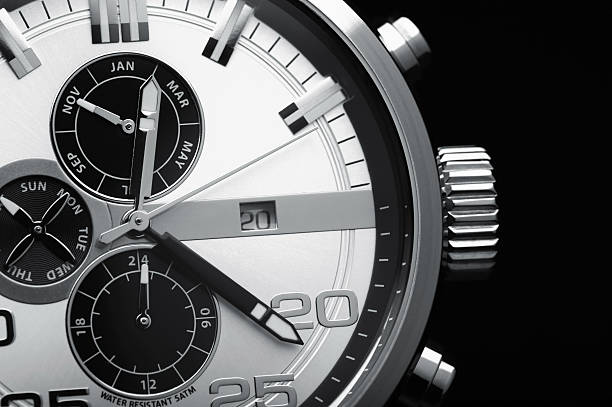

For the modern traveler, keeping track of time is about more than just knowing when your next meeting starts. It’s about staying connected to home while navigating a new time zone. When shopping for a luxury watch, you will inevitably encounter three specific terms: GMT, Dual Time, and Worldtimer.
While they all serve the same fundamental purpose, displaying multiple time zones-they function differently and cater to distinct lifestyles. Confusion between these watch complications is common, even among seasoned collectors.
In this guide, we break down the difference between GMT and Dual Time watches, explain how a Worldtimer complication works, and help you choose the best timepiece for your next journey.
What is a GMT Watch?
The term GMT watch originates from Greenwich Mean Time, the standard against which all time zones are set. Historically designed for pilots and aviators, the GMT timepiece has become the gold standard for travel watches.
How It Works
A standard GMT watch for travelers displays at least two time zones simultaneously. It typically features:
- A standard 12-hour hand for local time.
- An additional 24-hour hand that completes one rotation per day.
- A rotatable 24-hour watch bezel (either internal or external).
The Two Types of GMT Movements
To truly understand GMT vs. Dual Time, you must know there are two types of GMT movements:
- True GMT (Traveler’s GMT): The independent hour hand can be adjusted in one-hour increments without stopping the seconds or minute hands. This is ideal for travelers who cross time zones frequently, as you can adjust to local time instantly while the 24-hour hand stays set to home time.
- Office GMT: The 24-hour hand is adjustable, while the main hour hand moves with the minutes. This is better for someone who stays in one office but tracks a different market’s time (e.g., New York trading hours while in London).
Popular Examples: Rolex GMT-Master II, Tudor Black Bay GMT, Grand Seiko GMT.
Best For: Frequent flyers who need to switch local time quickly without losing accuracy on the minutes.
What is a Dual Time Watch?
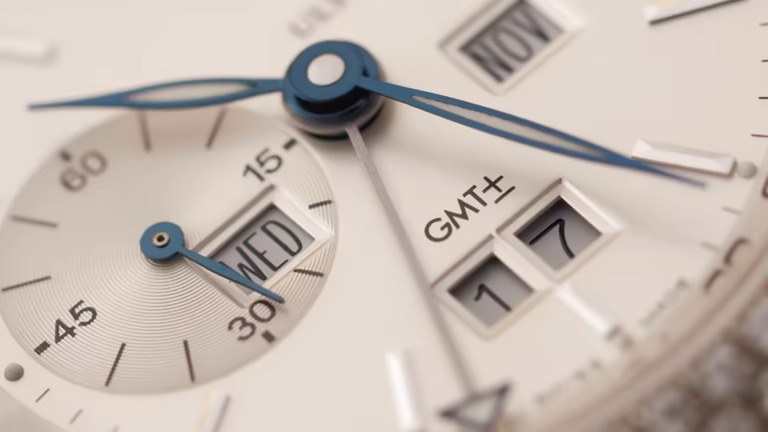
A Dual Time watch is often confused with a GMT, but the mechanism and readability differ. While a GMT uses a central hand and a bezel, a Dual Time zone watch usually relies on a sub-dial or a dedicated window on the dial.
How It Works
The primary hour and minute hands show your local time. A smaller sub-dial (usually at the 6, 9, or 12 o’clock position) or a digital window displays the second time zone.
- Adjustment: In many Dual Time watches, both time zones are linked. Adjusting the local time might require stopping the watch or adjusting the second time zone via a separate crown pusher.
- Readability: It is generally cleaner than a GMT but less instant to read at a glance.
Popular Examples: Lange & Söhne Lange 1 Time Zone, Jaeger-LeCoultre Master Control Dual Time.
Best For: Business travelers who prefer a dressier aesthetic and don’t need to adjust time zones on the fly every few hours.
What is a Worldtimer Watch?
If the GMT is for the pilot, the Worldtimer watch is for the global diplomat. This is the most complex of the three travel watch complications.
How It Works
A Worldtime complication allows the wearer to read all 24 time zones at once.
- City Ring: The dial features a ring listing major cities around the world (e.g., NY, LON, TOK).
- 24-Hour Ring: A rotating 24-hour chapter ring indicates day or night for each city.
- Synchronization: When you adjust the local time, the city ring and 24-hour ring rotate in sync.
There is no need to calculate offsets. If you know it is 2 PM in London, you can instantly see what time it is in Tokyo by looking at the corresponding city on the ring.
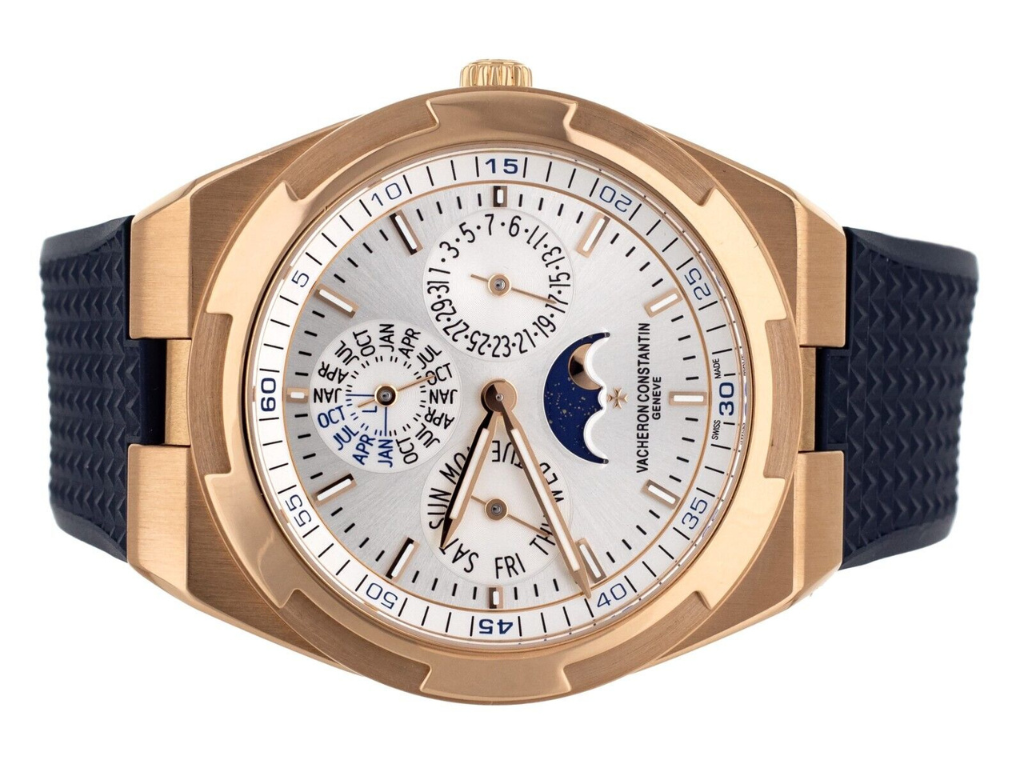
Popular Examples: Patek Philippe World Time, Vacheron Constantin Overseas World Time, Louis Vuitton Tambour World Time.
Best For: Global coordinators who need to reference multiple international offices simultaneously.
GMT vs. Dual Time vs. Worldtimer: Quick Comparison
| Feature | GMT Watch | Dual Time Watch | Worldtimer Watch |
|---|---|---|---|
| Time Zones Displayed | 2 (Local + Home/UTC) | 2 (Local + Home) | 24 (All Zones) |
| Adjustment Speed | Fast (True GMT) | Moderate | Fast (One crown) |
| Readability | Instant (Bezel + Hand) | Glance (Sub-dial) | Instant (City Ring) |
| Style | Sport / Tool Watch | Dress / Elegant | Complex / Luxury |
| Price Range | $500 – $50,000+ | $1,000 – $100,000+ | $10,000 – $150,000+ |
Which Travel Watch Should You Buy?
Choosing between a GMT, Dual Time, or Worldtimer depends on your specific travel habits and budget.
Choose a GMT If:
- You are a frequent flyer hopping between time zones weekly.
- You want a sporty, versatile watch that works with a suit or a t-shirt.
- You need to adjust your local hour hand quickly upon landing without stopping the watch.
Choose a Dual Time If:
- You travel less frequently but maintain contact with one other specific region.
- You prefer a dress watch aesthetic over a tool watch look.
- You appreciate traditional luxury watchmaking and sub-dial symmetry.
Choose a Worldtimer If:
- You manage teams or clients across multiple continents.
- Budget is less of a concern, and you want a high-horology complication.
- You love the visual appeal of a rotating city ring and never want to do math to calculate time differences.
Frequently Asked Questions (FAQ)
1. Is a GMT watch the same as a Dual Time?
No. While both show two time zones, a GMT watch typically uses a 24-hour hand and a rotatable bezel, whereas a Dual Time watch usually uses a sub-dial or window. GMTs are generally better for rapid time zone adjustment.
2. What is the difference between UTC and GMT on a watch?
Technically, GMT is a time zone, while UTC is a time standard. However, in watchmaking, the terms are used interchangeably to refer to the 24-hour reference hand.
3. Are Worldtimer watches hard to read?
Not at all. Once you understand the city ring, a Worldtimer complication is actually the fastest way to read multiple time zones simultaneously without calculation.
4. Can I swim with a GMT watch?
Many luxury GMT watches like the Rolex GMT-Master II have 100m of water resistance, making them suitable for swimming. However, check the specific rating of Dual Time or Worldtimer models, as dressier versions may have lower water resistance.
Conclusion:
Understanding the difference between GMT, Dual Time, and Worldtimer watches is essential for any collector building a travel watch collection.
- The GMT is the rugged, practical choice for the aviator.
- The Dual Time is the elegant choice for the boardroom.
- The Worldtimer is the ultimate statement for the global citizen.
Whichever you choose, ensure the watch specification matches your lifestyle. After all, the best watch is the one that keeps you on time, no matter where you are in the world.
Leave a Comment