


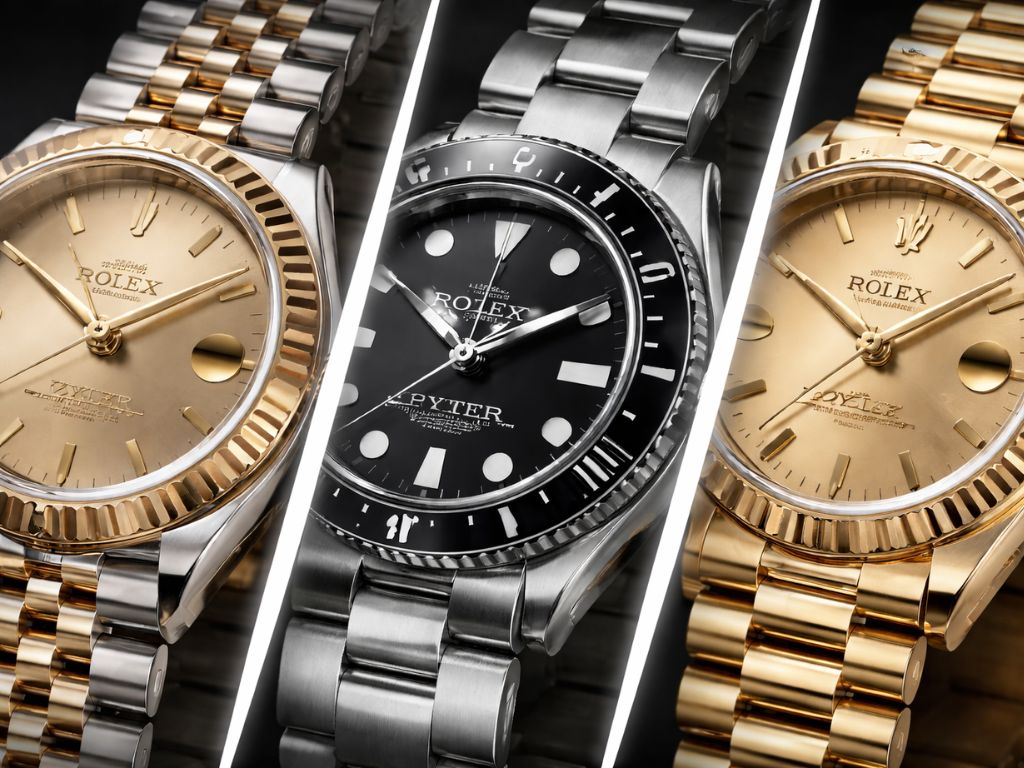

When investing in a Rolex timepiece, most buyers focus on the dial, case material, or movement. Yet the rolex bracelet—the often-overlooked component that secures the watch to your wrist fundamentally changes the wearing experience, aesthetic character, and even long-term value of your investment.
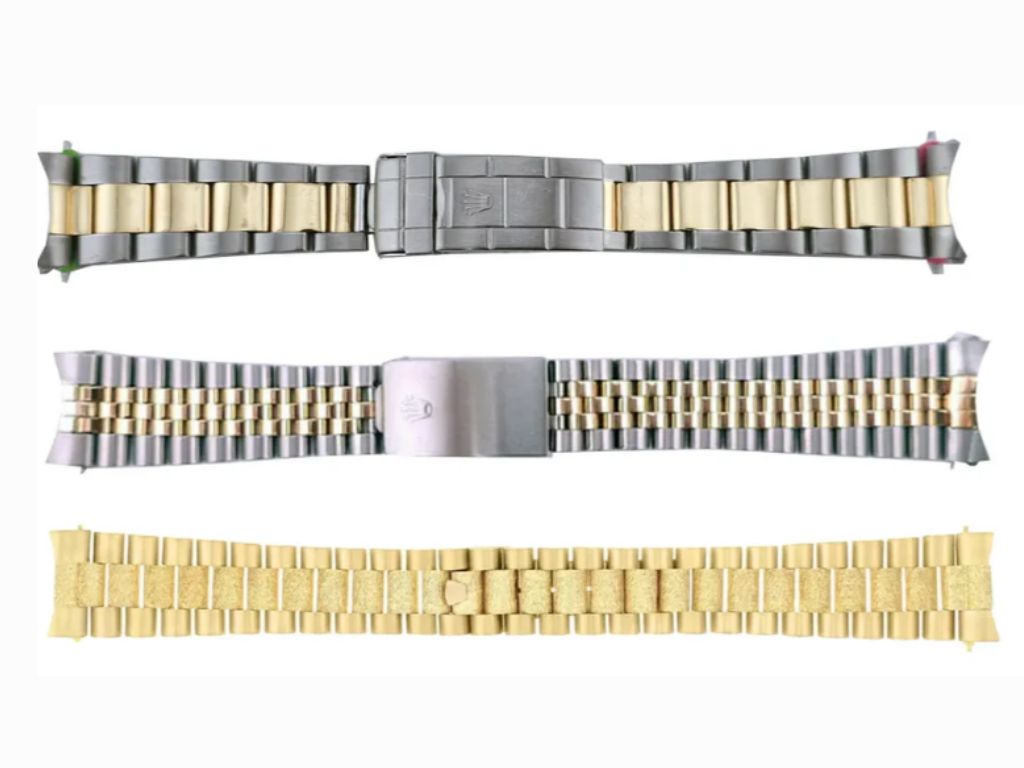
Rolex has manufactured three iconic metal bracelet designs over the past century: the Oyster, Jubilee, and President. Each serves distinct purposes, carries unique heritage, and suits different lifestyles. (While the modern Oysterflex elastomer bracelet has gained popularity recently, the “Big Three” metal bracelets remain the core of Rolex’s identity.)
Whether you’re purchasing your first Rolex watch or adding to a collection, understanding these differences ensures you select the perfect configuration for your needs. This comprehensive guide breaks down the history, construction, comfort, and investment implications of each bracelet type to help you make an informed decision.
1. The Oyster Bracelet
Origins and Heritage
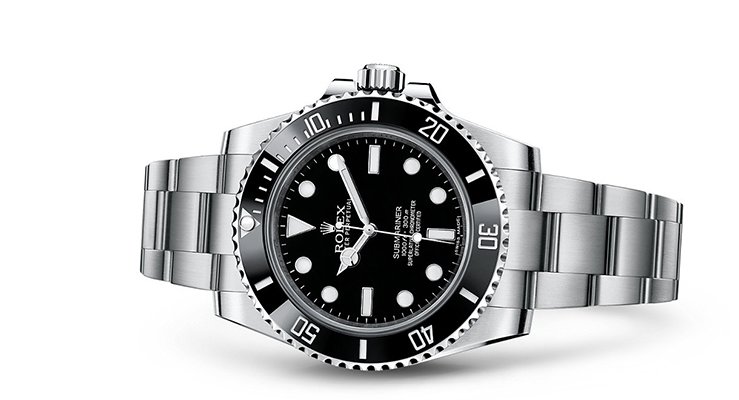
Introduced in the late 1930s, the Oyster bracelet represents Rolex’s longest-running bracelet design. Originally created as a natural extension of the Oyster case-the world’s first waterproof wristwatch case—this three-link design emphasized strength, simplicity, and functionality over decorative appeal.
The Oyster bracelet debuted on the Bubbleback models and became synonymous with Rolex’s tool watch philosophy. By the 1950s, it accompanied professional models like the Submariner and GMT-Master, cementing its reputation as the choice for adventurers and professionals.
Construction and Design
The Oyster bracelet features three flat, wide links arranged in a simple, robust pattern:
- Outer links: Solid end links that integrate seamlessly with the case.
- Center links: The prominent flat center piece that defines the bracelet’s industrial aesthetic (typically brushed).
- Clasp Systems: Modern Oyster bracelets utilize the Oysterlock safety clasp. Depending on the model, this includes:
- Easylink: Allows 5mm comfort adjustment (found on GMT-Master, Explorer, Datejust).
- Glidelock: Allows tool-free adjustment up to 20mm (found on Submariner, Sea-Dweller, Yacht-Master).
Modern Oyster bracelets utilize solid links throughout, replacing the hollow links of vintage pieces. This upgrade, implemented progressively from 2000–2015 depending on the model, significantly improves durability and prevents the “stretch” common in older bracelets.
Current Applications
Rolex deploys the Oyster bracelet across its sport and professional collections:
| Model | Typical Bracelet | Notes |
|---|---|---|
| Submariner | Oyster (Primary) | Glidelock clasp for diving suits |
| GMT-Master II | Oyster or Jubilee | Oyster offers sportier aesthetic |
| Daytona | Oyster | Iconic pairing since 1963 |
| Explorer I/II | Oyster | Tool watch purity |
| Sea-Dweller | Oyster | Heaviest duty construction |
| Air-King | Oyster | Entry-level professional |
| Milgauss | Oyster | Anti-magnetic heritage |
Comfort and Wearability
- Weight Distribution: The Oyster bracelet’s solid construction feels substantial—often 20–30% heavier than comparable Jubilee bracelets. This heft signals quality but may fatigue smaller wrists during extended wear.
- Wrist Presence: The flat, broad links create a more aggressive, masculine profile that dominates the wrist. On smaller cases (36mm Datejust), the Oyster can appear disproportionately bulky.
- Adjustability: Modern Oyster clasps feature extension systems (Easylink or Glidelock), ideal for temperature-induced wrist swelling or wearing over light sleeves.
Investment and Value Retention
Oyster bracelets generally offer slightly lower resale premiums than Jubilee or President alternatives, primarily because they’re perceived as the “standard” option. However, certain configurations buck this trend:
- Vintage hollow-link Oysters in excellent condition command premiums from collectors seeking originality.
- Oyster-equipped Daytonas often trade at parity with leather strap versions.
- Discontinued models (like the previous-generation Sea-Dweller) see bracelet-specific demand.
2. The Jubilee Bracelet
Origins and Heritage
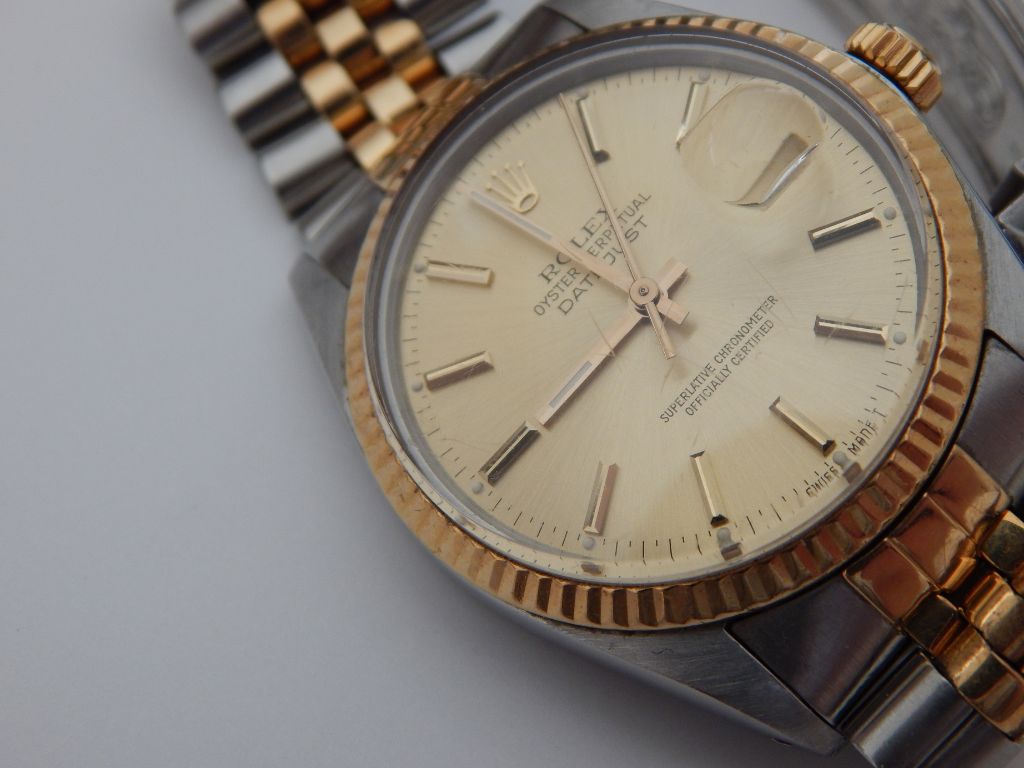
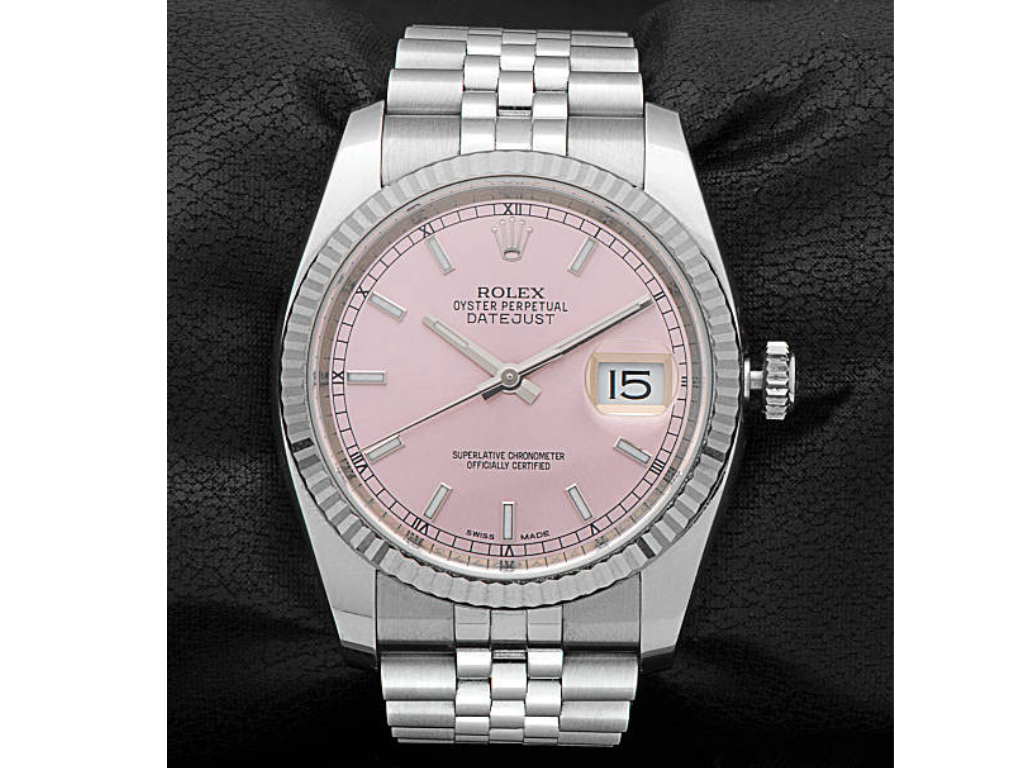
Rolex introduced the Jubilee bracelet in 1945 to commemorate the brand’s 40th anniversary—hence the celebratory name. Designed specifically for the Datejust (also debuting that year), the Jubilee represented a deliberate departure from the utilitarian Oyster.
Hans Wilsdorf envisioned the Datejust as a dress-capable everyday watch, requiring a bracelet that balanced sophistication with comfort. The five-link design achieved this by creating more articulation points, allowing the bracelet to conform elegantly to the wrist.
Construction and Design
The Jubilee’s signature five-link construction creates distinctive visual rhythm:
- Center links: Three smaller, polished links forming the bracelet’s focal point.
- Outer links: Two larger, brushed links providing structure and contrast.
- Concealed Crownclasp: Modern Jubilees feature a folding clasp hidden beneath the bracelet, maintaining seamless aesthetic continuity.
This multi-link architecture provides superior flexibility compared to the Oyster. More joints mean better wrist conformity and reduced “bracelet gap” on smaller wrists.
Current Applications
Originally exclusive to the Datejust, Rolex has expanded Jubilee availability in recent years:
| Model | Jubilee Availability | Notes |
|---|---|---|
| Datejust 36/41 | Primary Option | Classic pairing since 1945 |
| GMT-Master II | Alternative to Oyster | “Batman” and “Pepsi” on Jubilee since 2018 |
| Lady-Datejust | Standard | Proportioned for smaller cases |
| Datejust 31 | Standard | Mid-size elegance |
The 2018 decision to offer the GMT-Master II on Jubilee marked a significant strategic shift, acknowledging collector demand for vintage-inspired configurations and creating clear differentiation from the Submariner.
Comfort and Wearability
- Flexibility Advantage: The Jubilee’s five-link design distributes pressure across more contact points, reducing hot spots and improving all-day comfort. Many owners report forgetting they’re wearing a Jubilee-equipped watch—high praise for a 100+ gram timepiece.
- Dress Versatility: The polished center links catch light elegantly, transitioning seamlessly from business casual to formal attire. However, this same reflectivity makes the Jubilee appear more “jewelry-like” than the subdued Oyster.
- Maintenance Considerations: More links mean more pins, more screws, and more potential points of failure. While modern Jubilees use robust construction, they require slightly more attention during servicing.
Investment and Value Retention
The Jubilee bracelet has become increasingly desirable in secondary gray markets:
- GMT-Master II models on Jubilee command $1,000–$3,000 premiums over Oyster equivalents.
- Vintage Datejusts with original, unstretched Jubilees are highly sought after.
- Two-tone configurations (steel and gold) particularly benefit from Jubilee’s luxurious presentation.
Rolex’s limited production of Jubilee bracelets compared to Oyster creates natural scarcity, driving long-term value appreciation for complete, original examples.
3. The President Bracelet
Origins and Heritage
The President bracelet debuted in 1956 alongside the Day-Date—the first wristwatch to display both date and fully spelled day of the week. Rolex designed this exclusive bracelet to distinguish its flagship model from the Datejust and professional collections.
The name “President” originated not from Rolex marketing, but from popular association. When Lyndon B. Johnson wore a gold Day-Date during his presidency, the configuration became known as the “Presidential Watch,” with the distinctive three-link bracelet earning the “President” moniker. Rolex eventually trademarked the term, formalizing the association.
Construction and Design
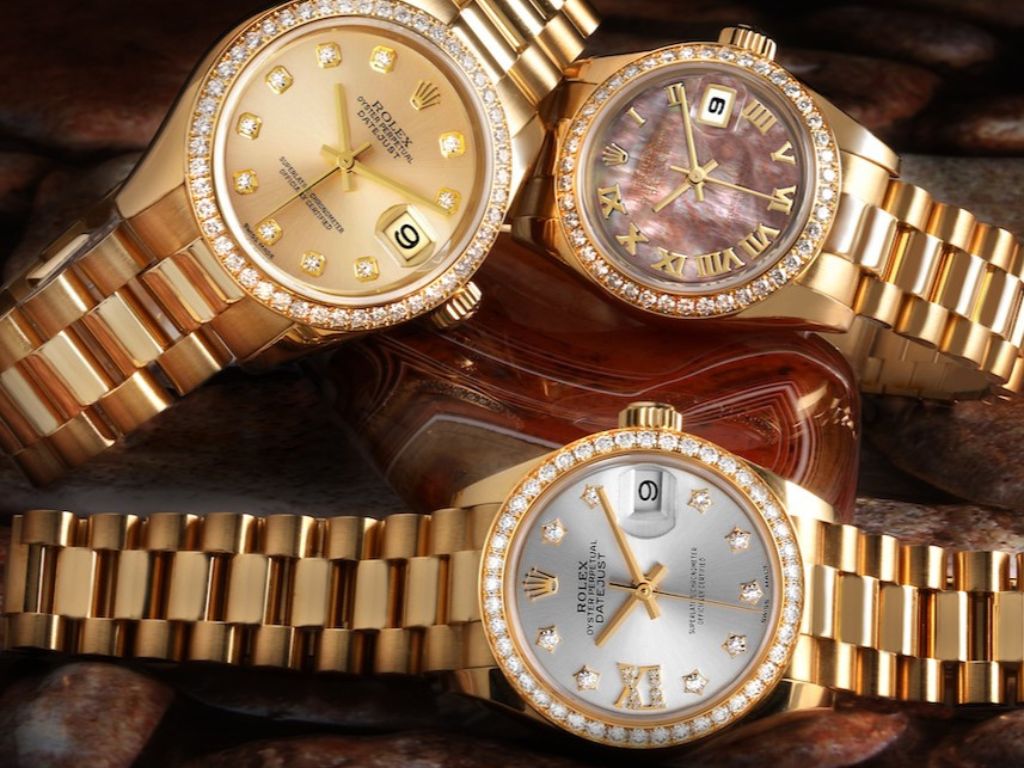
The President bracelet refines the three-link concept into pure luxury:
- Semi-circular links: Three rounded, polished links creating a continuous, flowing profile.
- Concealed Crownclasp: The most refined folding mechanism in Rolex’s arsenal, virtually invisible when closed.
- Precious Metal Construction: Historically available only in gold (yellow, white, rose) or platinum.
The rounded links create a cuff-like presence—substantial, smooth, and unmistakably precious. Unlike the technical appearance of Oyster or the busy elegance of Jubilee, the President communicates wealth through simplicity.
Current Applications
Rolex maintains the President bracelet as a Day-Date exclusive, though select Lady-Datejust models also feature this configuration:
| Model | President Availability | Metal Options |
|---|---|---|
| Day-Date 36 | Standard | Yellow, White, Everose Gold; Platinum |
| Day-Date 40 | Standard | Yellow, White, Everose Gold; Platinum |
| Lady-Datejust 28 | Select Models | Precious Metals |
This exclusivity reinforces the Day-Date’s position as Rolex’s flagship collection. While aftermarket President bracelets exist for Datejusts, genuine factory configurations remain primarily Day-Date focused.
Comfort and Wearability
- Sculpted Fit: The semi-circular links create a natural curvature that hugs the wrist more closely than Oyster or Jubilee. The President feels integrated with the wearer’s arm rather than sitting atop it.
- Weight Distribution: In solid gold or platinum, the President bracelet contributes significantly to overall heft—a 40mm Day-Date in platinum weighs approximately 280 grams, with the bracelet representing roughly 60% of that mass. This density signals unmistakable quality but requires wrist strength for comfortable daily wear.
- Temperature Sensitivity: Precious metals conduct heat more readily than steel. The President bracelet feels noticeably cooler in winter and warmer in summer—a sensory reminder of its material value.
Investment and Value Retention
The President bracelet’s exclusivity drives consistent value:
- Platinum Presidents command the highest premiums in the Day-Date range.
- Vintage “Big Day-Date” (36mm with wide links, 1956–1977) examples with original bracelets are grail pieces.
- Aftermarket conversions (fitting President bracelets to Datejusts) actually reduce value—collectors prize factory-original configurations.
Because the President only ships on precious metal watches, it inherently maintains higher baseline values than steel alternatives.
4. The Modern Alternative: Oysterflex
While this guide focuses on the three iconic metal bracelets, no 2026 guide is complete without mentioning the Oysterflex.
Introduced in 2015, the Oysterflex is technically a bracelet (not a strap) because it features a flexible metal blade core encased in high-performance elastomer.
- Best For: Sporty luxury, water sports, and those who find metal bracelets too heavy.
- Found On: Yacht-Master, Daytona, and Sea-Dweller (precious metal versions).
- Comfort: Often rated higher than metal bracelets for active wear due to breathability and weight savings.
- Value: Generally holds value well, though traditionalists still prefer metal for investment pieces.
Rolex Bracelet Types: Head-to-Head Comparison
| Factor | Oyster | Jubilee | President |
|---|---|---|---|
| Primary Use | Sports/Professional | Dress/Casual | Formal/Luxury |
| Link Count | 3 Flat Links | 5 Mixed Links | 3 Rounded Links |
| Weight | Heavy (Solid Steel) | Medium | Very Heavy (Precious Metal) |
| Comfort | Good | Excellent | Very Good (with Heft) |
| Durability | Excellent | Very Good | Good (Scratches show on Gold) |
| Formal Appropriateness | Limited | Excellent | Perfect |
| Investment Trend | Stable | Appreciating | Strong (Day-Date Only) |
| Model Availability | Wide (Sports) | Datejust, GMT | Day-Date, Lady-Datejust |
| Clasp Type | Oysterlock (Easylink/Glidelock) | Concealed Crownclasp | Concealed Crownclasp |
Rolex Bracelet Maintenance and Longevity
Regardless of bracelet choice, proper care ensures decades of service:
- Cleaning: Rinse steel bracelets monthly with mild soap and water to remove skin oils and debris. Use a soft toothbrush for link gaps. Dry thoroughly to prevent water spots.
- Precious Metal Care: Gold President bracelets require gentle polishing to maintain luster. Consider professional refinishing every 5–7 years to remove scratches—DIY polishing risks altering link shapes.
- Stretch Prevention: Even solid-link bracelets gradually elongate as pins wear. Have authorized service centers inspect pin tolerances during routine maintenance (every 10 years for modern Rolexes).
- Clasp Maintenance: The folding mechanisms contain tiny springs that weaken over time. If the clasp feels loose or fails to snap shut securely, immediate service prevents accidental loss.
- Storage: Store watches flat or on soft stands to prevent bracelet deformation. Avoid hanging watches by their bracelets long-term.
Conclusion:
Your Rolex bracelet choice reflects personal priorities: utility (Oyster), versatility (Jubilee), or prestige (President). There’s no universally “best” option—only the best option for your lifestyle, aesthetic preferences, and wearing habits.
- The Oyster remains the definitive choice for those who view Rolex as the ultimate tool watch.
- The Jubilee rewards those prioritizing comfort and elegance.
- The President unambiguously signals achievement and exclusivity.
Whatever your selection, remember that Rolex bracelets are engineered to outlast their owners. Choose based on how you’ll wear the watch for the next decade, not fleeting trends. In the world of Rolex, the bracelet isn’t merely an accessory—it’s an integral component of a timekeeping legacy that spans generations.
Leave a Comment