



If you own an automatic (self-winding) luxury timepiece whether it’s a Rolex, Omega, Patek Philippe, or Audemars Piguet you’ve likely heard about watch winders. But what exactly are they, and do you really need one? In this comprehensive guide, we’ll break down everything you need to know about watch winders for automatic watches, including how they work, their benefits, and why they’re essential for serious collectors.
What Is a Watch Winder?
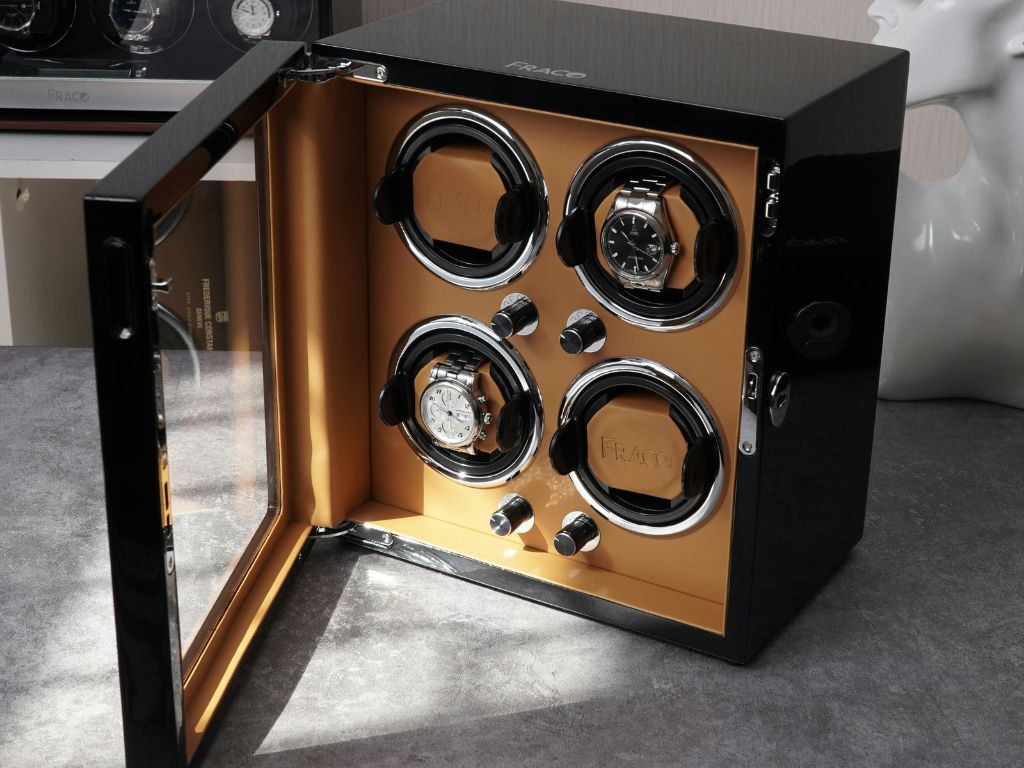
A watch winder is a device designed to keep automatic watches running when they’re not being worn. Automatic watches rely on the natural motion of your wrist to wind the mainspring and maintain power. Without regular movement, they’ll stop within 24 to 72 hours (depending on the model’s power reserve). A watch winder mimics wrist motion through gentle, controlled rotations, ensuring your timepiece stays wound and ready to wear at a moment’s notice.
How Do Automatic Watch Winders Work?
Watch winders use a motorized turntable to rotate your watch in specific directions (clockwise, counterclockwise, or bidirectional) at programmed intervals. Modern winders often include customizable settings such as:
- TPD (Turns Per Day): The number of rotations per day needed to keep your watch fully wound.
- Rotation Direction: Some watches require unidirectional winding; others work best with alternating motion.
- Rest Periods: To prevent overwinding and reduce wear on the movement.
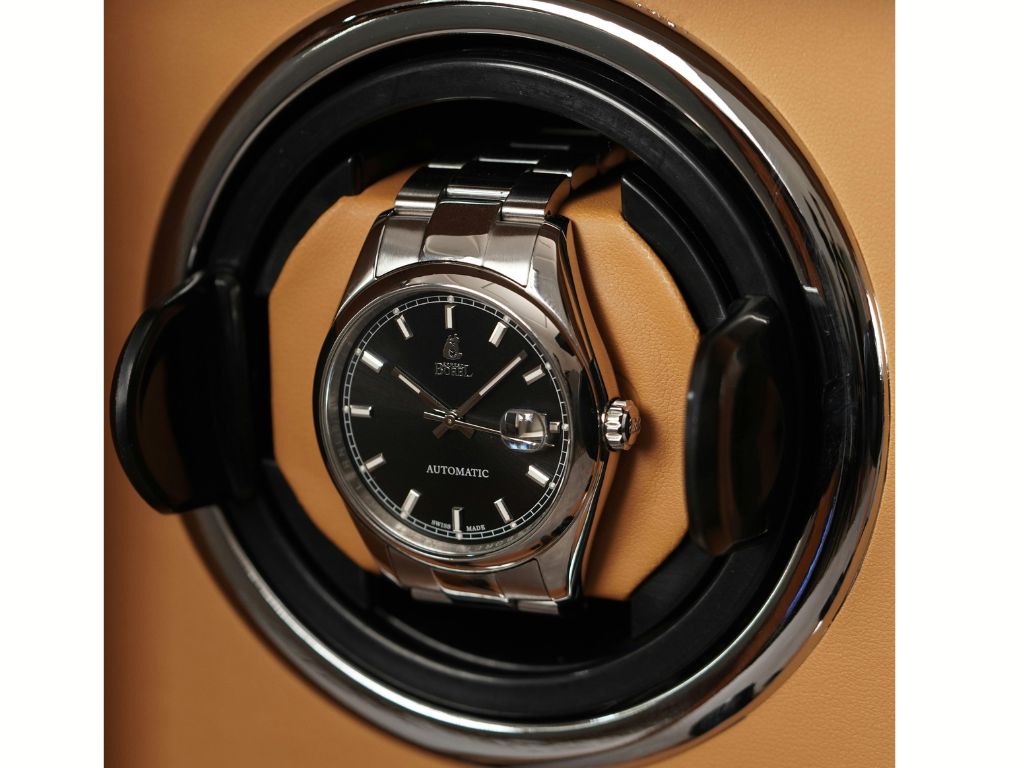
Higher-end watch models feature quiet motors, soft interior cushions, and premium materials like wood or leather ideal for luxury watch storage.
Why You Need a Watch Winder for Automatic Watches
1. Keeps Your Watch Always Ready to Wear
No more resetting the time, date, or complex calendar functions every time you pick up your watch. With a winder, your automatic timepiece stays accurate and operational—even after weeks off your wrist.
2. Protects Complicated Movements
Watches with perpetual calendars, moon phases, or tourbillons are notoriously difficult and costly to reset. A watch winder ensures these intricate watch complications and mechanisms remain active, saving you time and potential service fees.
3. Extends the Lifespan of Your Watch
Regular motion helps lubricate the movement’s internal components, preventing oil from drying out and reducing long-term wear. Inactivity can actually harm mechanical watches more than consistent, gentle use.
4. Showcases and Organizes Your Collection
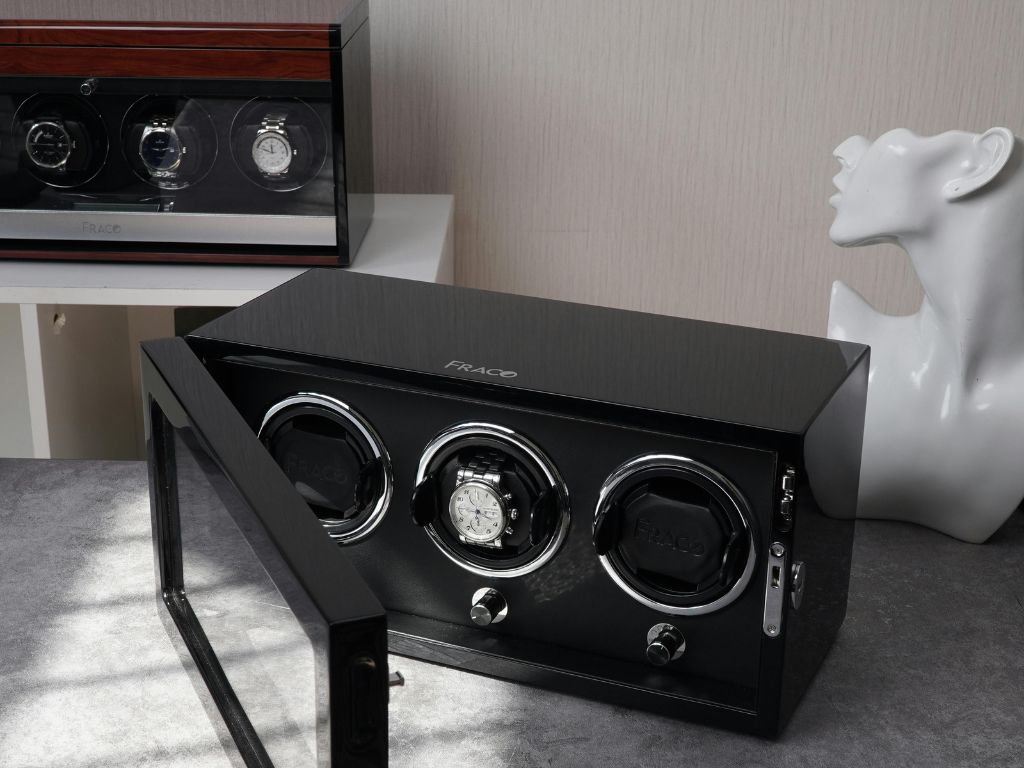
Premium watch winders double as elegant display cases. Whether you own one luxury watch or a dozen, a winder provides a secure, dust-free environment while highlighting your investment.
5. Ideal for Multi-Watch Enthusiasts
If you rotate between several automatic watches, a multi-watch winder ensures each one remains powered without manual winding or frequent wear.
Who Should Use a Watch Winder?
- Luxury watch collectors (e.g., Rolex, Audemars Piguet, Jaeger-LeCoultre)
- Owners of complication-rich timepieces
- Frequent travelers who own multiple automatic watches
- Anyone who doesn’t wear their automatic watch daily
Pro Tip: If your automatic watch has a short power reserve (under 48 hours), a winder becomes even more valuable.
Choosing the Right Watch Winder: Key Features to Consider
When shopping for a best watch winder for automatic watches, look for:
- Adjustable TPD settings (typically 650–1,800 TPD)
- Quiet, reliable motor (Japanese or Swiss-made preferred)
- Soft, non-marring cushions that fit various case sizes
- Battery & AC power options
- Lockable glass cover for security and dust protection
- Elegant design that complements your decor
Top brands include Wolf, Barrington, Orbita, and Heiden—all known for quality craftsmanship and watch-friendly engineering.
Common Myths About Watch Winders—Debunked
Myth: Winders overwind and damage watches.
Truth: Modern automatic watches have overwind protection. Quality winders use programmable settings to prevent excess rotation.
Myth: Manual winding is just as good.
Truth: While manual winding works in a pinch, it doesn’t replicate natural motion or maintain consistent power—especially for complex calibers.
Myth: Only ultra-expensive watches need winders.
Truth: Any automatic watch benefits from consistent winding, regardless of price—though the ROI is highest for high-end models.
Final Thoughts: Is a Watch Winder Worth It?
If you’ve invested in an automatic luxury watch, a watch winder isn’t just a luxury—it’s a smart maintenance tool. It ensures accuracy, protects your investment, and enhances the ownership experience. For collectors and enthusiasts, it’s as essential as a watch box or service kit.
A watch winder bridges the gap between convenience and care for automatic timepieces. Whether you own a single heirloom watch or a curated collection, this device ensures your watches remain precise, protected, and perpetually ready. Don’t let your automatic watch sit idle keep it alive with a quality winder.
Invest in time. Preserve precision. Elevate your collection.
Leave a Comment